| Joan’s Life | |||||
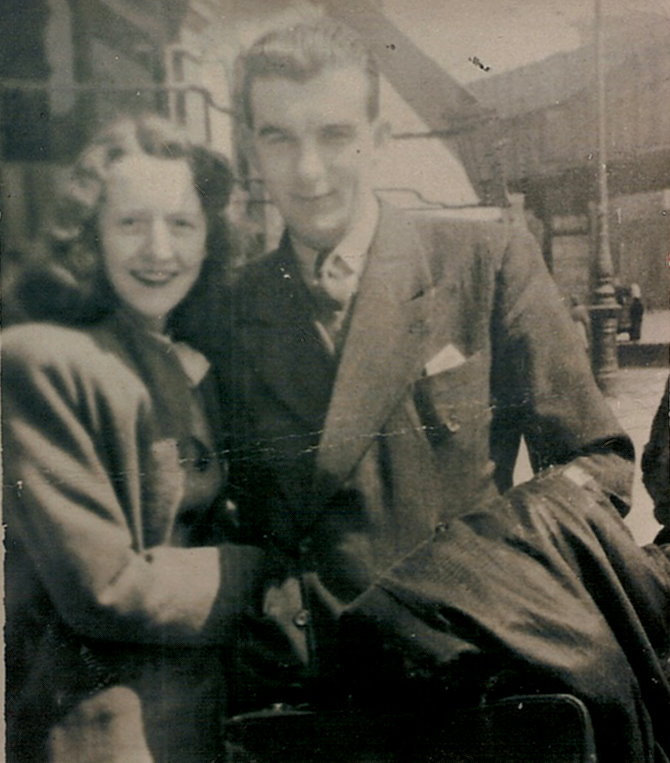
| Joan Brigid O’Hara was born on the 28th October 1926 to Michael and Mary Ellen O’Hara of 24 Colinward Street, Belfast. Joan, the second youngest of eight children, had five sisters and two brothers; Patsy, Kathleen, Maura, Nancy, Madge, Michael and Tom. As a little girl Joan attended St John’s Primary School, a short distance from her Colinward Street home. When Joan left school she went to work in the mill. At the age of 16, Joan met Denis Connolly, a well educated, fluent Irish speaker from Monaghan. Denis came to Belfast looking for work and, as Catholic "Free Stater" struggled to find anything other than bar work. They married in St Paul’s Chapel, Cavendish Street, on 10th October 1946. The newly married couple honeymooned in Dublin and on their return set up home with Joan’s sister. | 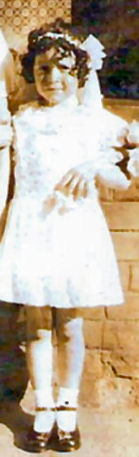 |
||||
|
|||||
|
In the summer of 1965 the family moved into 91 Ballymurphy Road and the second generation of the Connolly/O'Hara family was extended for the final time with the addition of Irene. A good family life resumed and the family became an integral part of the close knit community of Ballymurphy. Joan made many friends amongst her neighbours and it was Joan who was called upon when someone was in need. In the May of 1971, a new generation was introduced to the Connolly/O'Hara family. Joan and Denis became the proud grandparents of Christopher, a grandson born with a shock of red hair just like Joan's. |
|||||
|
|||||
Joan’s
Death |
|||||
Joan was shot as she left her place of safety and went to the aid of a young boy (Noel Phillips) who was shot and wounded by the same regiment. Joan was shot several times in the head and body, with injuries so severe that part of her face was blown off. Joan's autopsy report indicates that Joan bled to death. Eye witnesses of the events claim Joan was blatantly refused emergency medical attention, even as she cried out for help. |
|||||
|
The murder of Joan, the only woman shot in Ballymurphy during one of the trouble's worse events, left husband Denis without a wife and left eight children without a mother. The extent of Joan’s injuries was so horrific that Denis struggled to identify her body; he finally did on his third attempt aided only by Joan's red hair. |
|||||
|
Joan’s family were in turmoil, not knowing what to do having suddenly lost their wife and mother. Denis, shocked by the situation and panicked by the on going trouble, sent his young daughters Denise (with baby Christopher), Briege, Joan, Maura and Irene to his family in the south of Ireland. Initially they had to endure a stay in a refugee camp, and this is where, having stumbled across the 12o'clock news one evening, Briege and Denise were to find out their mother was dead and had been buried. Both girls, shocked and stunned, only had each other for comfort as they mourned their mother’s death. Joan was branded an IRA woman, a claim that was never true and as a result, her death was not investigated properly. |
|||||
|
Life
with out Joan |
|||||
|
Denis, already suffering from poor health, had a nervous breakdown after similar events at Bloody Sunday in Derry less than six months later. Denis spent several weeks in and out of hospital as he tried to come to terms with his wife's death. His health never fully recovered and he died of cancer in May 1982. |
|||||
| Joan's children struggled to survive without her and a normal family life. Joan's eldest daughter, having married a soldier, was posted in Germany with her husband. As she struggled with the sudden loss, she attempted suicide on several occasions. Joan's son Patrick, at the age of 17, having become angry at her death and the continuous torture of the family, turned to alcohol to try and ease the pain. Pat eventually died at the age of 50 from the effects of alcohol. Briege, at just 14, left school to help run the family home and care for the younger children. And most poignantly, Irene, at just 3 years of age, asked constantly for her mummy. | |||||
| The family learnt how to cope with their pain and desperately tried to make a life for them selves out of the horror. Joan's children went on to have 27 children collectively and an ever growing number of great grand children, but Joan was missing from all these events. | |||||
| Joan's death meant she wasn't there when her sons and daughters were growing up, getting married and having their own children. She was not there when her children took sick or suffered heartache. She was not there to help her children cope with the loss of their father, their brother, their sister or their own children. She was not there for many first days at school, her grand children's university graduations, countless birthdays and many Christmases. | |||||
She was not at hand for advice, guidance and reassurance for those occasions when only mummy knows best. |
|||||

|
|
|